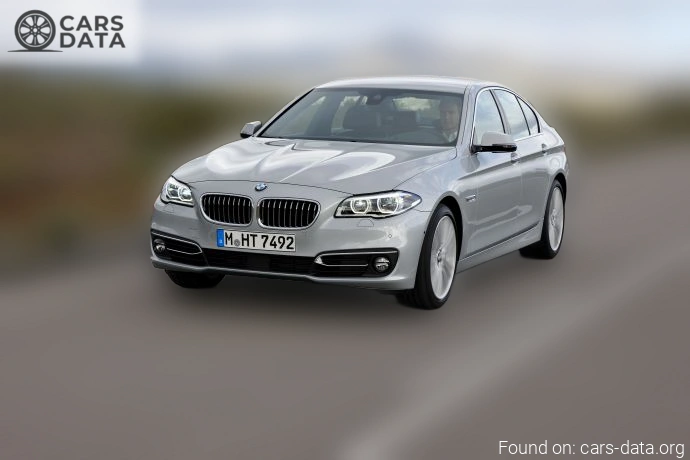
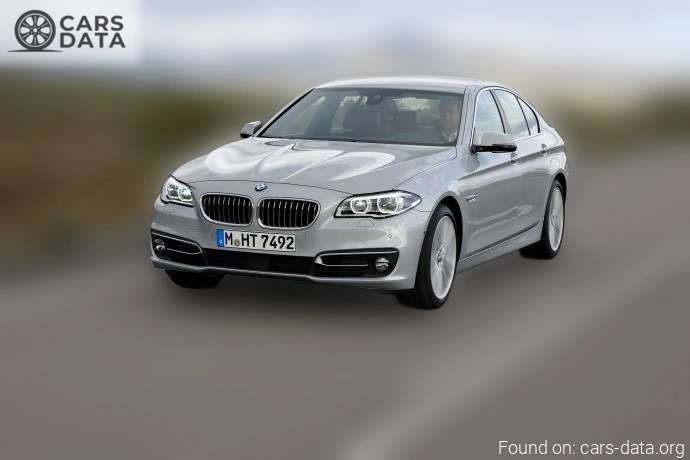
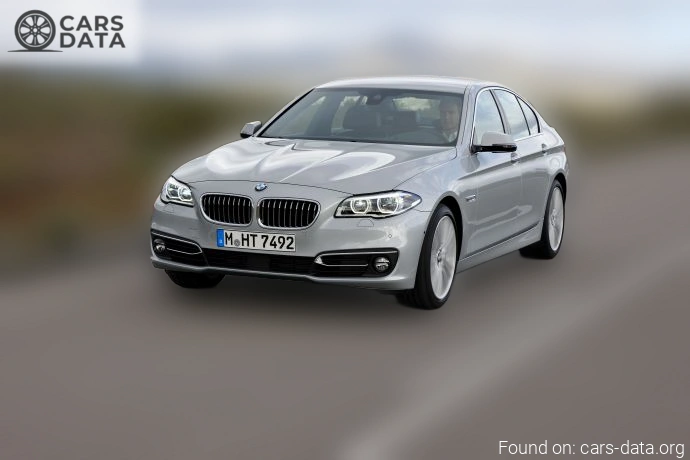
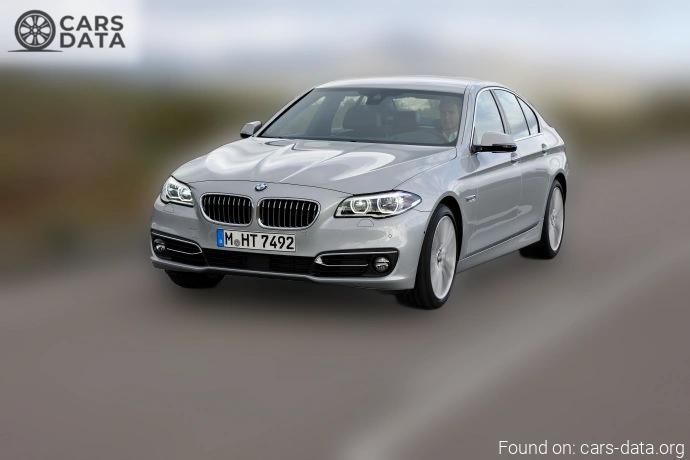
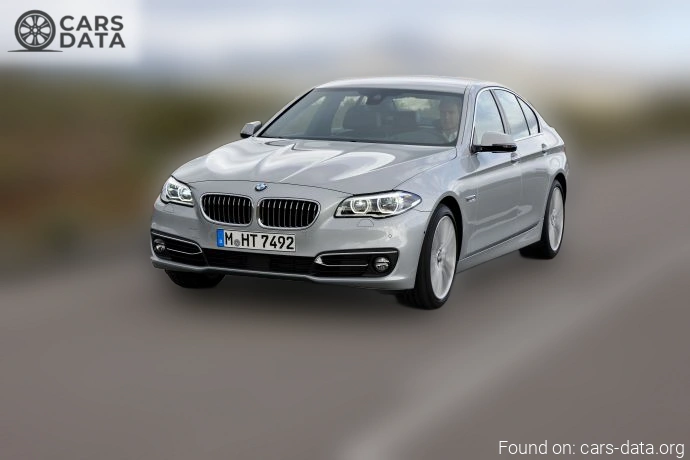
The 5 Series boasts respectable performance figures. Its 0-100 km/h acceleration of 8.7 seconds and a top speed of 226 km/h (140.43 mph) indicate a capable yet not exceptionally sporty driving experience. This suggests a balance between performance and comfort, typical of the 5 Series' focus.
Specs
-
Rating
Acceleration 0 100 Kmh
8.7 sec
Acceleration 0 62 Mph
8.7 sec
Max Speed
226 km/h 140.43 mph
Body & Dimensions
The BMW 5 Series Sedan is a mid-size luxury vehicle with a spacious interior (5 seats) and a relatively large exterior (4907mm length, 1860mm width). Its dimensions suggest a comfortable ride, while the 2968mm wheelbase contributes to stability. The turning circle of 12 meters indicates good maneuverability in urban environments. Overall, it's a well-proportioned sedan balancing interior space with exterior dimensions.
Specs
-
Rating
Body Type
Sedan
Seats
5
Doors
4
Length
4907 mm 193.19 in.
Width
1860 mm 73.23 in.
Width Including Mirrors
2102 mm 82.76 in.
Height
1462 mm 57.56 in.
Wheelbase
2968 mm 116.85 in.
Front Track
1600 mm 62.99 in.
Rear Track
1627 mm 64.06 in.
Front Overhang
832 mm 32.76 in.
Rear Overhang
1107 mm 43.58 in.
Min Turning Circle
12 m 39.37 ft.
Fuel Consumption
The BMW 5 Series petrol model demonstrates respectable fuel efficiency with a combined consumption of 6.7 l/100km (35.11 US mpg). While urban driving sees higher consumption (8.7 l/100km), extra-urban fuel economy improves significantly (5.5 l/100km). CO2 emissions are at 156 g/km, placing it within the moderate range for its class. Overall, it offers a good balance of performance and efficiency.
Specs
-
Rating
Fuel Type
Petrol (Gasoline)
Fuel Consumption Urban
8.7 l/100 km 27.04 US mpg 32.47 UK mpg 11.49 km/l
Fuel Consumption Extra Urban
5.5 l/100 km 42.77 US mpg 51.36 UK mpg 18.18 km/l
Fuel Consumption Combined
6.7 l/100 km 35.11 US mpg 42.16 UK mpg 14.93 km/l
Co2 Emissions
156 g/km
Engine & Transmission
The 5 Series boasts a 1.6-liter, inline-4, turbocharged engine (N20B16) producing 170 horsepower and 250 Nm of torque. This front-engine, rear-wheel-drive configuration is paired with an 8-speed automatic transmission (Steptronic). Key features include twin-power turbocharging, intercooler, direct injection, and VALVETRONIC/Double-VANOS valvetrain technology. The car's specifications suggest a balance of performance and efficiency, suitable for everyday driving and occasional spirited acceleration.
0W-30, 5W-30 / BMW Longlife-01 FE 0W-30, 0W-40, 5W-30, 5W-40 / BMW Longlife-01 0W-30, 0W-40, 5W-30, 5W-40 / BMW Longlife-04
Coolant
9.1 l 9.62 US qt | 8.01 UK qt
Drivetrain Architecture
The Internal combustion engine (ICE) drives the rear wheels of the vehicle.
Drive Wheel
Rear wheel drive
Number Of Gears And Type Of Gearbox
8 gears, automatic transmission Steptronic
Front Suspension
Double wishbone, Transverse stabilizer
Rear Suspension
Independent multi-link spring suspension with stabilizer
Engine Systems
Start & Stop System
Brakes
The BMW 5 Series boasts a robust braking system with ventilated discs at both the front and rear, ensuring reliable stopping power. Electric power steering provides responsive handling, complemented by a rack and pinion steering type. The tire and rim sizes vary, offering options for different configurations (17" and 18" options are available), and the car includes an Anti-lock Braking System (ABS) for enhanced safety.
Front wheel rims: 8J x 17; 8J x 18 Rear wheel rims: 8J x 17; 8J x 18; 9J x 18
Weight & Capacity
The 5 Series boasts impressive power-to-weight and torque-to-weight ratios (9.5 kg/Hp and 6.5 kg/Nm respectively), suggesting brisk acceleration. Its relatively high kerb weight (1615 kg) is balanced by a substantial maximum load capacity (610 kg) and a generous fuel tank (70 liters). The 520-liter trunk provides ample cargo space.
FAQs for BMW - 5 Series Sedan (F10 LCI, Facelift 2013)
While the specs don't list trunk volume, the overall dimensions suggest a reasonably sized trunk suitable for everyday use and moderate luggage.
The 12-meter turning circle is relatively good for a car of this size, making parking in tighter spaces manageable.
Fuel efficiency isn't specified in the data; it varies depending on the engine and drivetrain options chosen.
It has a top speed of 226 km/h (140.43 mph).
While not explicitly stated as 0-60mph, its 0-62mph time is 8.7 seconds, which is very close.
No, the 5 Series is a luxury sedan. While it offers good acceleration, its focus is more on comfort and overall driving experience than outright speed.
The urban fuel consumption is 8.7 l/100km, which is typical for a car of this size and performance.
With 156 g/km, the CO2 emissions are moderate for its class, but newer models often offer lower figures.
The combined fuel consumption is 6.7 l/100km, offering a decent balance between city and highway driving.
The 5 Series uses a 1.6-liter, inline-4, turbocharged internal combustion engine.
The car is equipped with an 8-speed automatic transmission (Steptronic).
The engine produces 170 horsepower at 5000-6000 rpm and 250 Nm of torque at 1500-4700 rpm.
It features ventilated disc brakes on both the front and rear axles.
Multiple options are available, including 17" and 18" rims with corresponding tire sizes (225/55 R17, 245/45 R18, and 275/40 R18).
The car includes ABS (Anti-lock Braking System).
Engine options vary by model year and trim level, but generally include a range of inline-6 and V8 engines, often with options for hybrid powertrains.
Fuel economy depends on the engine and drivetrain chosen, but generally falls within the range expected for a luxury sedan of its size and performance capabilities.
Expect advanced driver-assistance systems, a premium infotainment system with navigation, and a range of luxury amenities depending on the trim level. Specific features vary by model year.
Fuel efficiency isn't specified in the data, but the 70-liter tank suggests a potentially longer range.
Towing capacity is not listed; this would need to be checked in the vehicle's specifications.
Based on the power-to-weight and torque-to-weight ratios, performance should be quite good, but specific performance figures (0-60 mph, top speed) are needed for a definitive answer.