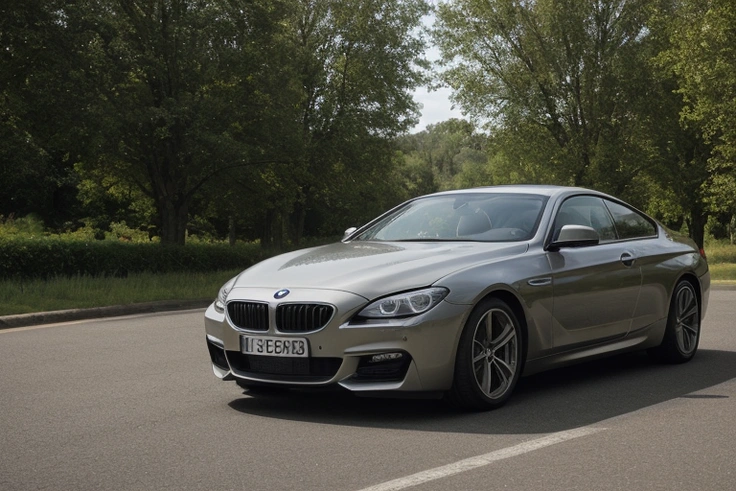
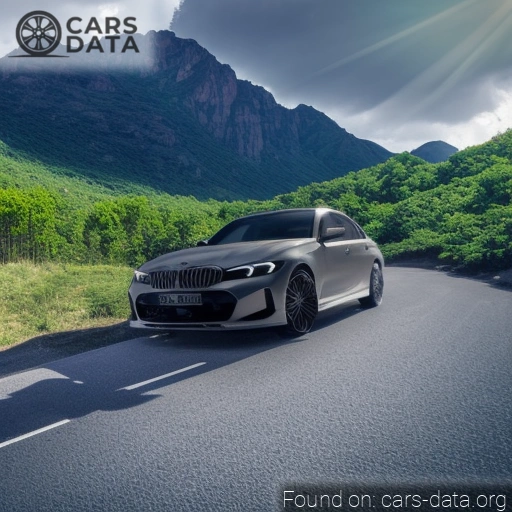
The 6 Series boasts a responsive performance, accelerating from 0 to 100 km/h (0-62 mph) in a brisk 7.4 seconds and reaching a top speed of 230 km/h (143 mph). Its aerodynamic design is evident in its low drag coefficient of 0.41, suggesting good fuel efficiency and stability at higher speeds.
Specs
-
Rating
Acceleration 0 100 Kmh
7.4 sec
Acceleration 0 62 Mph
7.4 sec
Max Speed
230 km/h 142.92 mph
Drag Coefficient Cd
0.41
Body & Dimensions
The BMW 6 Series Coupe is a stylish and sporty 2-door coupe offering seating for four. Its relatively compact dimensions (4815mm length, 1725mm width, 1365mm height) provide agile handling, enhanced by a 2625mm wheelbase and a tight turning circle of 11.7 meters. While compact, the interior dimensions suggest comfortable seating for four adults, though rear passengers might find legroom slightly limited given the coupe body style.
Specs
-
Rating
Body Type
Coupe
Seats
4
Doors
2
Length
4815 mm 189.57 in.
Width
1725 mm 67.91 in.
Height
1365 mm 53.74 in.
Wheelbase
2625 mm 103.35 in.
Front Track
1435 mm 56.5 in.
Rear Track
1465 mm 57.68 in.
Min Turning Circle
11.7 m 38.39 ft.
Fuel Consumption
The 6 Series is a petrol-powered vehicle with relatively high fuel consumption. Urban driving yields 16.8 l/100km, while extra-urban driving improves to 7.9 l/100km. The combined fuel consumption is 11.5 l/100km. This suggests it's likely a powerful, performance-oriented vehicle, but not particularly fuel-efficient for everyday use. Consider this if fuel economy is not a top priority.
Specs
-
Rating
Fuel Type
Petrol (Gasoline)
Fuel Consumption Urban
16.8 l/100 km 14 US mpg 16.81 UK mpg 5.95 km/l
Fuel Consumption Extra Urban
7.9 l/100 km 29.77 US mpg 35.76 UK mpg 12.66 km/l
Fuel Consumption Combined
11.5 l/100 km 20.45 US mpg 24.56 UK mpg 8.7 km/l
Engine & Transmission
This 6 Series model boasts a naturally aspirated 3.4L inline-6 M30 engine, delivering 220hp and 315Nm of torque. Power is sent to the rear wheels via a 5-speed manual transmission. The car features a comfortable ride with independent front (McPherson strut) and rear coil spring suspension. While offering decent power for its time, it's a relatively basic setup lacking modern features.
Specs
-
Rating
Powertrain Architecture
Internal Combustion engine
Power
220 Hp @ 5700 rpm.
Power Per Litre
64.1 Hp/l
Torque
315 Nm @ 4000 rpm. 232.33 lb.-ft. @ 4000 rpm.
Engine Layout
Front, Longitudinal
Engine Model Code
M30
Engine Displacement
3430 cm3 209.31 cu. in.
Number Of Cylinders
6
Engine Configuration
Inline
Cylinder Bore
92 mm 3.62 in.
Piston Stroke
86 mm 3.39 in.
Compression Ratio
9.2:1
Number Of Valves Per Cylinder
2
Fuel Injection System
Multi-port manifold injection
Engine Aspiration
Naturally aspirated engine
Engine Oil Capacity
5.75 l 6.08 US qt | 5.06 UK qt
Engine Oil Specification
15W-40, 15W-50 / API SF
Coolant
12 l 12.68 US qt | 10.56 UK qt
Drivetrain Architecture
The Internal combustion engine (ICE) drives the rear wheels of the vehicle.
Drive Wheel
Rear wheel drive
Number Of Gears And Type Of Gearbox
5 gears, manual transmission
Front Suspension
Independent, type McPherson with coil spring and anti-roll bar
Rear Suspension
Independent coil spring
Brakes
The 6 Series boasts ventilated disc front brakes and disc rear brakes, providing decent stopping power. The 220/55 VR 390 tire size suggests a focus on performance and handling, though the exact performance characteristics depend on the specific tire model. The cone worm steering with recirculation balls is a classic system known for its robustness and feel, though it might lack the precision of more modern systems.
Specs
-
Rating
Front Brakes
Ventilated discs
Rear Brakes
Disc
Steering Type
Cone worm with recirculation balls
Tires Size
220/55 VR 390
Weight & Capacity
The 6 Series boasts a relatively low weight-to-power ratio of 6.6 kg/Hp (150.7 Hp/tonne), suggesting good acceleration and responsiveness. The weight-to-torque ratio of 4.6 kg/Nm (215.8 Nm/tonne) further emphasizes its potential for brisk performance. With a kerb weight of 1460 kg and a maximum load capacity of 420 kg, it offers a decent amount of cargo space, with a minimum trunk volume of 413 liters. The 70-liter fuel tank provides a reasonable range between refills.
While it has four seats, the rear seats are best suited for shorter journeys or smaller passengers due to the coupe's sloping roofline.
Fuel efficiency varies depending on the specific engine and year of the 6 Series. Consult the owner's manual or online resources for specific fuel economy data.
Yes, its relatively small size and 11.7-meter turning circle make it fairly easy to maneuver, even in tight city spaces.
The 6 Series accelerates from 0 to 100 km/h (0-62 mph) in 7.4 seconds and has a top speed of 230 km/h (143 mph).
The drag coefficient is 0.41, indicating good aerodynamic efficiency.
Yes, with a top speed of 230 km/h (143 mph), the 6 Series is suitable for high-speed driving.
No, the 6 Series has above-average fuel consumption, especially in urban settings. It's not designed for maximum fuel economy.
It uses petrol (gasoline).
The combined fuel consumption is 11.5 liters per 100 kilometers.
It has a naturally aspirated 3.4L inline-6 cylinder engine (M30).
It produces 220hp at 5700 rpm and 315Nm of torque at 4000 rpm.
It features a 5-speed manual transmission.
Ventilated discs improve brake cooling, preventing brake fade under heavy use, leading to better stopping power and safety, especially during spirited driving.
Cone worm steering offers good feedback and a direct feel, but it might be slightly less responsive than more modern systems like rack and pinion. It's known for its durability.
The suitability depends on the specific tire model. While the size suggests performance capabilities, factors like tread pattern and compound determine performance in various weather conditions. Check the tire manufacturer's specifications.
It's a luxury grand tourer, emphasizing comfort, performance, and style.
That depends on the model year and trim level. Historically, the 6 Series has offered a range of powerful inline-6 and V8 engines.
Reliability can vary depending on maintenance and specific model year. Generally, BMWs require diligent maintenance, but when properly cared for, they can be reliable.
The maximum weight capacity is 1880 kg (4144.69 lbs).
The fuel tank capacity is 70 liters (18.49 US gallons / 15.4 UK gallons).
The minimum trunk/boot space is 413 liters (14.58 cubic feet).