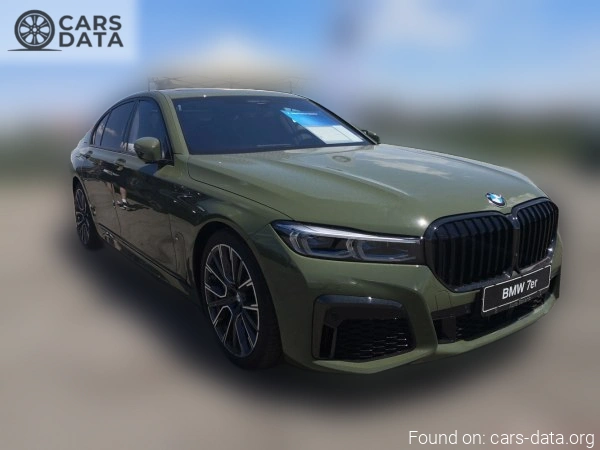
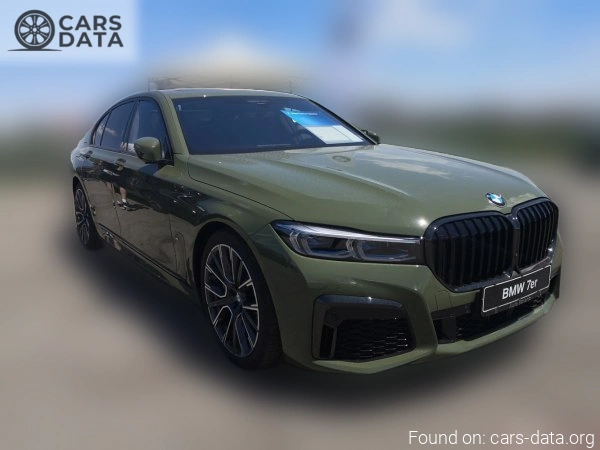
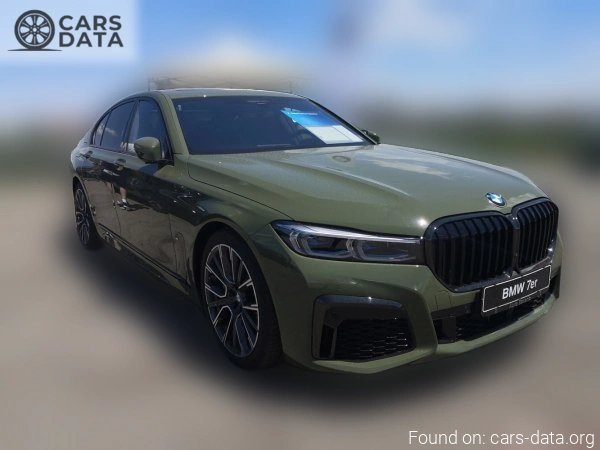
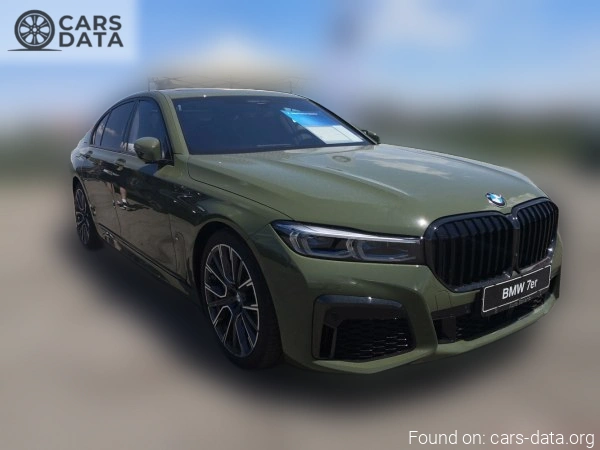
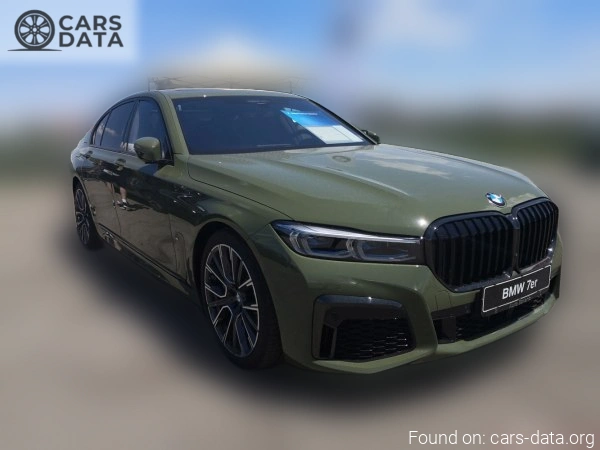
The BMW 7 Series boasts impressive acceleration, reaching 0-100 km/h in 6.2 seconds and 0-62 mph in the same time. Its top speed is electronically limited to 250 km/h (155.34 mph), indicating a focus on luxury and performance, rather than outright speed.
Specs
-
Rating
Acceleration 0 100 Kmh
6.2 sec
Acceleration 0 62 Mph
6.2 sec
Max Speed
250 km/h, Electronically limited 155.34 mph
Body & Dimensions
The BMW 7 Series is a large, luxurious sedan offering ample space and comfort. Its substantial dimensions (5120mm length, 1902mm width) provide a spacious interior for five passengers. The long wheelbase (3070mm) contributes to a smooth and comfortable ride. The relatively large overhangs suggest a focus on passenger space over outright maneuverability.
Specs
-
Rating
Body Type
Sedan
Seats
5
Doors
4
Length
5120 mm 201.57 in.
Width
1902 mm 74.88 in.
Width Including Mirrors
2169 mm 85.39 in.
Height
1467 mm 57.76 in.
Wheelbase
3070 mm 120.87 in.
Front Track
1618 mm 63.7 in.
Rear Track
1646 mm 64.8 in.
Front Overhang
902 mm 35.51 in.
Rear Overhang
1148 mm 45.2 in.
Fuel Consumption
The BMW 7 Series (petrol) boasts relatively good fuel efficiency figures for its class. Combined fuel consumption is 7 liters per 100 kilometers, translating to approximately 34 US MPG and 40 UK MPG. Urban and extra-urban figures are also competitive, suggesting a balance between city and highway driving. CO2 emissions are relatively low at 161 grams per kilometer, indicating a focus on environmental friendliness.
Specs
-
Rating
Fuel Consumption Urban Economy Nedc
8.4 l/100 km 28 US mpg 33.63 UK mpg 11.9 km/l
Fuel Consumption Extra Urban Economy Nedc
6.2 l/100 km 37.94 US mpg 45.56 UK mpg 16.13 km/l
Fuel Consumption Combined Economy Nedc
7 l/100 km 33.6 US mpg 40.35 UK mpg 14.29 km/l
Co2 Emissions Nedc
161 g/km
Fuel Type
Petrol (Gasoline)
Engine & Transmission
The BMW 7 Series, with its Internal Combustion engine (ICE) architecture, boasts a 249 hp output at 5000-6500 rpm, paired with a twin-power turbo and intercooler system. The 1998cc inline-4 engine delivers 400 Nm of torque at 1550-4500 rpm. The rear-wheel drive system is coupled with an 8-speed automatic Steptronic transmission. Advanced suspension features, including double wishbone front suspension, independent multi-link rear suspension, and air suspension, contribute to a comfortable and controlled ride. The engine's specifications include VALVETRONIC and Double-VANOS valvetrain technology, direct injection, and a start-stop system. Overall, the engine's performance and advanced features suggest a luxurious and powerful driving experience.
0W-20 / BMW Longlife-17 FE+ 0W-30 / BMW Longlife-12 FE 0W-30, 0W-40, 5W-30, 5W-40 / BMW Longlife-04
Drivetrain Architecture
The Internal combustion engine (ICE) drives the rear wheels of the vehicle.
Drive Wheel
Rear wheel drive
Number Of Gears And Type Of Gearbox
8 gears, automatic transmission Steptronic
Front Suspension
Double wishbone, Transverse stabilizer, Air suspension
Rear Suspension
Independent multi-link suspension, Air suspension, Transverse stabilizer
Engine Systems
Start & Stop System
Brakes
The 7 Series boasts a solid foundation with ventilated disc brakes on all four wheels, enhancing stopping power and control. Electric power steering provides a responsive and comfortable driving experience. The 225/60 R17 tires mounted on 7.5J x 17 rims offer a good balance between ride comfort and handling. The inclusion of ABS ensures enhanced safety during braking maneuvers. The steering rack and pinion system provides precise steering feedback.
Specs
-
Rating
Front Brakes
Ventilated discs
Rear Brakes
Ventilated discs
Assisting Systems
ABS (Anti-lock braking system)
Steering Type
Steering rack and pinion
Power Steering
Electric Steering
Tires Size
225/60 R17
Wheel Rims Size
7.5J x 17
Weight & Capacity
The 7 Series boasts impressive power and torque figures, reflected in its low weight-to-power and weight-to-torque ratios (6.9 kg/Hp and 4.3 kg/Nm respectively). With a substantial kerb weight of 1715 kg, it offers a generous maximum load capacity of 670 kg and a sizable fuel tank (78 liters). The trunk space of 515 liters provides ample cargo room.
Very spacious. Its large dimensions and long wheelbase provide generous legroom and headroom for all passengers.
Given its size and longer overhangs, maneuverability in tight spaces might be slightly challenging compared to smaller sedans.
The specs point to a comfortable, luxurious, large sedan prioritizing passenger space and ride quality.
6.2 seconds.
Yes, but it is electronically limited.
Luxury and performance.
The combined fuel consumption is 7 liters per 100 kilometers (approximately 34 US MPG and 40 UK MPG).
The CO2 emissions are 161 grams per kilometer.
Urban fuel consumption is 8.4 liters per 100 kilometers, while extra-urban consumption is 6.2 liters per 100 kilometers.
The BMW 7 Series uses a 4-cylinder, inline Internal Combustion engine (ICE) with twin-power turbo and intercooler.
The 7 Series is equipped with an 8-speed automatic Steptronic transmission.
The car features double wishbone front suspension, independent multi-link rear suspension, and air suspension for a comfortable and controlled ride.
It features ventilated disc brakes on both the front and rear axles.
The car comes with 7.5J x 17 inch rims and 225/60 R17 tires.
ABS (Anti-lock Braking System) is a standard feature.
Engine options vary by model year and region, but typically include a range of powerful inline-6 and V8 engines, often with hybrid or plug-in hybrid options.
Expect luxurious materials, advanced infotainment systems, spacious seating, and a focus on passenger comfort and convenience. Specific features vary by trim level.
Fuel economy depends heavily on the engine choice and driving style. Generally, expect lower fuel economy compared to smaller, less powerful vehicles, but figures vary significantly.
Fuel efficiency isn't in the specs, but given the power and weight, it's likely to be moderate, not exceptional.
Towing capacity isn't specified; consult the owner's manual for that information.
Passenger capacity is not listed in the specifications.